Biometric technology promises to (finally) make airport security smoother.
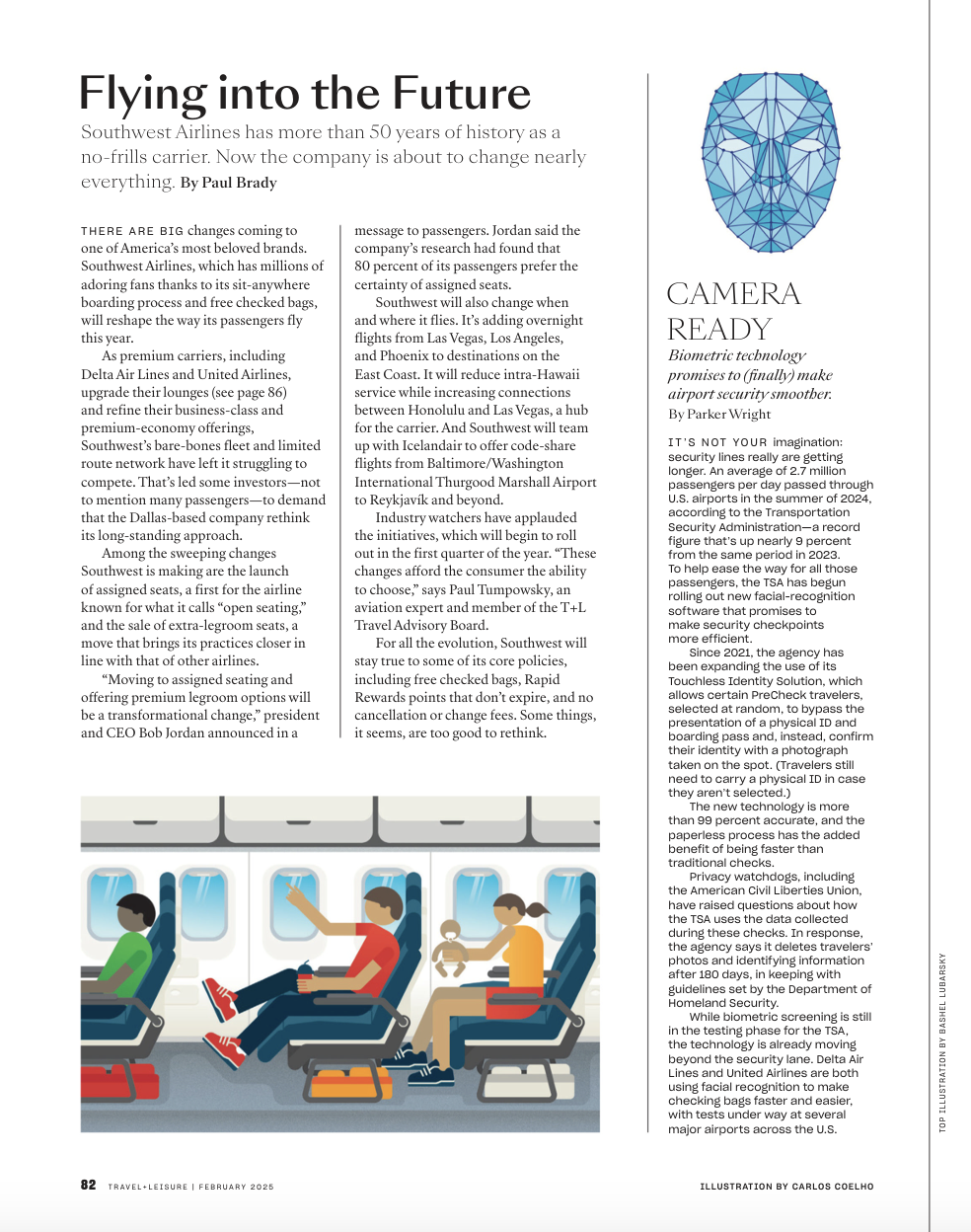
It’s not your imagination: security lines really are getting longer. An average of 2.7 million passengers per day passed through U.S. airports in the summer of 2024, according to the Transportation Security Administration—a record figure that’s up nearly 9 percent from the same period in 2023. To help ease the way for all those passengers, the TSA has begun rolling out new facial-recognition software that promises to make security checkpoints more efficient.
Since 2021, the agency has been expanding the use of its Touchless Identity Solution, which allows certain PreCheck travelers, selected at random, to bypass the presentation of a physical ID and boarding pass and, instead, confirm their identity with a photograph taken on the spot. (Travelers still need to carry a physical ID in case they aren’t selected.)
The new technology is more than 99 percent accurate, and the paperless process has the added benefit of being faster than traditional checks.
Privacy watchdogs, including the American Civil Liberties Union, have raised questions about how the TSA uses the data collected during these checks. In response, the agency says it deletes travelers’ photos and identifying information after 180 days, in keeping with guidelines set by the Department of Homeland Security.
While biometric screening is still in the testing phase for the TSA, the technology is already moving beyond the security lane. Delta Air Lines and United Airlines are both using facial recognition to make checking bags faster and easier, with tests under way at several major airports across the U.S.
Leave a Reply